Jean Piaget
Blog Reflections
Prepared by: Jonalyn Ravino

Who is Jean Piaget?
Jean William Fritz Piaget was a Swiss psychologist known for his work on child development. Piaget’s theory of cognitive development and epistemological view are together called “genetic epistemology”. Piaget placed great importance on the education of children.

Born: August 9, 1896, Neuchâtel, Switzerland Died: September 16, 1980, Geneva, Switzerland Full name: Jean William Fritz Piaget Spouse: Valentine Châtenay (m. 1923–1980). Children: Jacqueline Piaget, Laurent Piaget, Lucienne Piaget Parents: Rebecca Jackson, Arthur Piaget

Jean Piaget’s theory of cognitive development suggests that intelligence changes as children grow. A child’s cognitive development is not just about acquiring knowledge, the child has to develop or construct a mental model of the world. Cognitive development occurs through the interaction of innate capacities and environmental events, and children pass through a series of stages.
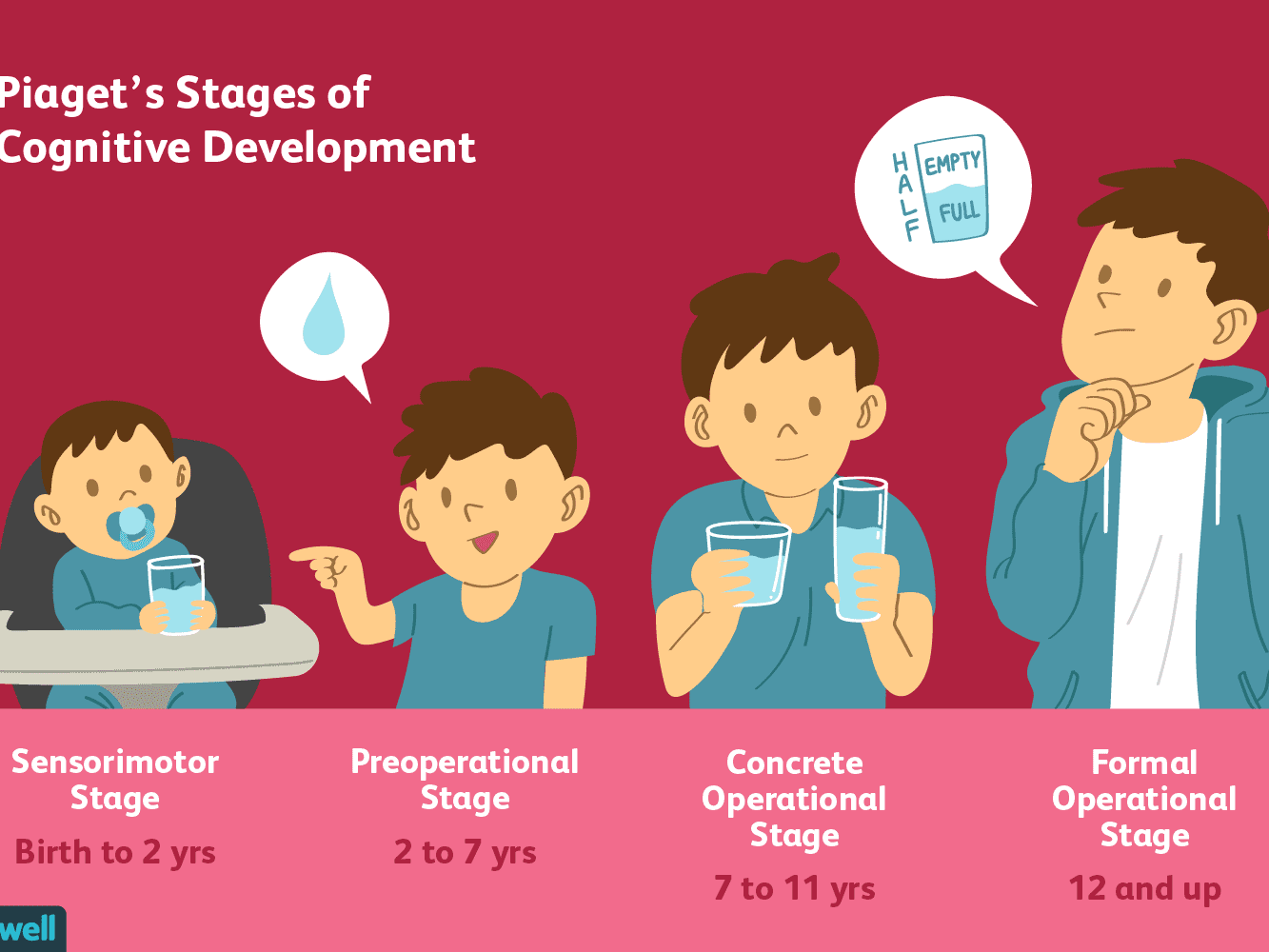
Piaget’s theory of cognitive development proposes 4 stages of development
Sensorimotor stage: Birth to 2 years Pre operational stage: 2 to 7 years Concrete operational stage: 7 to 11 years Formal operational stage: 12 ages up

Sensorimotor:
The first stage of development lasts from birth to approximately age At this point in development, children know the world primarily through their senses and movements

Pre-operational stage:
The second stage of development lasts from the ages of 2 to 7 and is characterized by the development of language and the emergence of symbolic play.

Concrete operational stage:
The third stage of cognitive development lasts from the age of 7 to approximately age 11. At this point, logical thought emerges, but children still struggle with abstract and theoretical thinking.

Formal operational stage:
In the fourth and final stage of cognitive development, lasting from age 12 and into adulthood, children become much more adept at abstract thought and deductive reasoning.In the fourth and final stage of cognitive development, lasting from age 12 and into adulthood, children become much more adept at abstract thought and deductive reasoning.

Piaget’s Contributions on Psychology
Piaget’s theories continue to be studied in the areas of psychology, sociology, education, and genetics. His work contributed to our understanding of the cognitive development of children. Piaget helped demonstrate that childhood is a unique and important period of human development. His work also influenced other notable psychologists including Howard Gardner and Robert Sternberg.
In their 2005 text, “The Science of False Memory,” authors C.J. Brainerd and V.F. Reyna wrote of Piaget’s influence: “In the course of a long and hugely prolific career, he contributed important scholarly work to fields as diverse as the philosophy of science, linguistics, education, sociology, and evolutionary biology. Above all, however, he was the developmental psychologist of the 20th century.
For two decades, from the early 1960s to the early 1980s, Piagetian theory and Piaget’s research findings dominated developmental psychology worldwide, much as Freud’s ideas had dominated abnormal psychology a generation before. Almost single-handedly, he shifted the focus of developmental research away from its traditional concerns with social and emotional development and toward cognitive development.”
Related: Jean Piaget’s Greatest Words of Wisdom
Root of knowledge

Piaget identified himself as a genetic epistemologist. In his paper Genetic Epistemology, Piaget explained, "What the genetic epistemology proposes is discovering the roots of the different varieties of knowledge, since its elementary forms, following to the next levels, including also the scientific knowledge."

Epistemology is a branch of philosophy that is concerned with the origin, nature, extent, and limits of human knowledge. Piaget was interested not only in the nature of thought but also in how it develops and how genetics impact this process.

His early work with Binet's intelligence tests led Piaget to conclude that children think differently than adults. While this is a widely accepted notion today, it was considered revolutionary at the time. It was this observation that inspired his interest in understanding how knowledge grows throughout childhood.
Schemas
Piaget suggested that children sort the knowledge they acquire through their experiences and interactions into groupings known as schemas. When new information is acquired, it can either be assimilated into existing schemas or accommodated through revising an existing schema or creating an entirely new category of information.
Piaget’s list of his Idea known for:
- “Origins of Intelligence in the Child,” 1936
- “Play, Dreams and Imitation in Childhood,” 1945
- “Main Trends in Psychology.”1970
- “Genetic Epistemology,” 1970
- “Memory and intelligence,” 1973

 Foundation of Education