Assignment:
Created and design by:
Ravino, Jonalyn S.
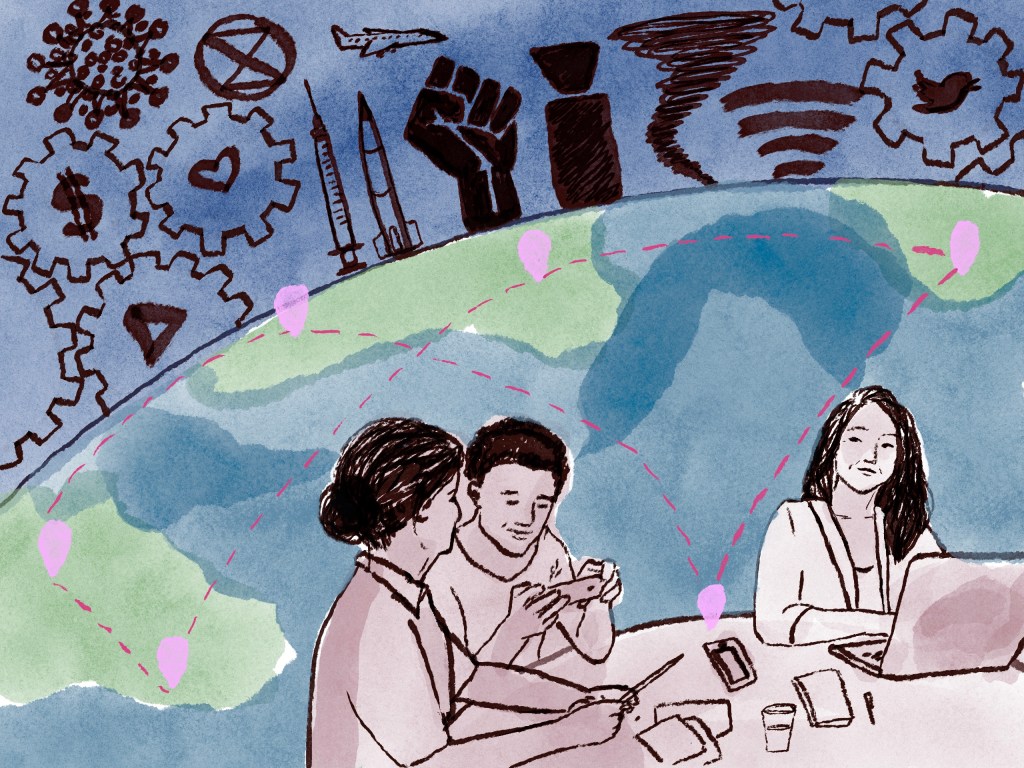
Anthropology is the study of what makes us human. Anthropologists take a broad approach to understanding the many different aspects of the human experience, which we call holism. They consider the past, through archaeology, to see how human groups lived hundreds or thousands of years ago and what was important to them.
When did Anthropology Start?
Anthropology emerged as a serious professional and scientific discipline beginning in the 1920s. The focus and practice of anthropological research developed in different ways in the United States and Europe.
How old is Anthropology?
The word “anthropology” was first used in English as early as 1593. However, anthropology as a distinct academic discipline is comparatively young. Its roots go back to the intellectual Enlightenment of the 18th and early 19th centuries in Europe and North America.
The Origin of Anthropology
The word anthropology dates back to the late 16th century, but it was not until the 19th century that it was applied to the academic discipline that now bears its name. In the United States, this field of study is typically divided into four distinct branches: physical (or biological) anthropology, archaeology, cultural (or social) anthropology, and linguistic anthropology.
Anthropology is from the New Latin word anthropologia (“the study of humanity”) and shares its ultimate root in Greek, anthrōpos (“human being”), with a number of other words in English, such as anthropomorphize, philanthropy, and misanthrope.
The field of “literary anthropology” actually covers two fields of study. The first is an exploration of the role that literature plays in social life and individual experience, in particular social, cultural, and historical settings. Included in this study is the question of what “literature” is. Literary anthropology can be understood here as an exploration of different kinds of genre of expression, and how these genres can be said to have a historical specificity, a cultural evaluation, and a social institutionalism attached to them. The anthropologist might examine literature as the oral recounting and exchange of myth among 20th-century Amazonian hunter-gatherers, or the focus might be on the establishment of printed daily newspapers in Hungary and its links to the 19th-century rise of Hungarian nationalism. Secondly, literary anthropology is a study of the nature of anthropology itself as a discipline. What role does writing play in the processes of accruing anthropological knowledge? What is the history of the relationship between anthropology and particular kinds of writing? Should exponents be happy to proceed with this historical tradition or is it appropriate that anthropology now reimagine itself in terms of different kinds of expression—visual, audible, sensory—or different kinds of literary genre: fictional or poetic or dialogic? It can be seen that these two fields of study—the first, more traditional approach and the latter “literary turn” to the very nature of knowing and representation—are not discrete. In asking what kinds of expression it should adopt for getting to know its research subject and for disseminating the results of its research, anthropology is also considering the role of literary and other forms of expression to do work—to make sense—at particular historical, social-structural, political, and personal moments. Literary anthropology has thus been a focus of growing anthropological concern for the way in which it throws light on the entire complex of the human social condition, including the role of narrative in consciousness, the nature of creativity in social life, and the way in which anthropology might do justice to evidencing the subject. Reference: https://www.oxfordbibliographies.com/view/document/obo-9780199766567/obo-9780199766567-0067.xml
Notable Filipino Cultural Values
Core Concepts
- Hospitality
- Hiya
- Modesty
- Courtesy
- Warmth
- Respect
- Kapwa
- Fatalism
References
The primary author of this profile was Chara Scroope (2017), with the Naming section authored by Nina Evason (2021).
- Advameg. (n.d.). Philippines. Retrieved from http://www.everyculture.com/No-Sa/The-Philippines.html.
- Australian Bureau of Statistics. (2017). Census 2016, Country of Birth of Person by Sex (SA2+) [Data set]. http://stat.data.abs.gov.au/Index.aspx?DataSetCode=ABS_C16_T06_SA.
- Branellec, M. (2015). Cultural differences between Filipinos and Australians. Retrieved from http://etcom.com.au/cultural-differences-between-filipinos-and-australians/#sthash.PtP9ymRo.imCnHFlN.dpbs.
- Borlaza, G. C., & Hernandez, C. G. (2016). Philippines. Retrieved from https://www.britannica.com/place/Philippines.
- Central Intelligence Agency. (2017). The World Factbook: Philippines. Retrieved from https://www.cia.gov/library/publications/the-world-factbook/geos/rp.html.
- COMMISCEO Global. (2016). The Philippines Guide. Retrieved from http://www.commisceo-global.com/country-guides/phillippines-guide.
- Department of Home Affairs. (2019). Philippines-born: Community Information Summary. Retrieved from https://www.homeaffairs.gov.au/mca/files/2016-cis-philippines.PDF
- Diversify. (2017). Understanding Filipino culture. Retrieved from http://www.diversifyoss.com/newsroom/understanding-filipino-culture/.
- Dolan, R. E. (1991). Philippines: A Country Study. Retrieved from http://countrystudies.us/philippines/.
- Dresser, N. (1996). Multicultural Manners. New York: Wiley & Sons.
- Elicay, K. (2018). 20 Most Popular Baby Names in the Philippines. Retrieved from https://www.smartparenting.com.ph/parenting/baby/20-most-popular-baby-names-in-the-philippines-a00228-20181211
- Echo. (2016). Origin of Hugot. Retrieved from https://echogeronca.wordpress.com/tag/origin-of-hugot/.
- Fennig, C. D., & Simons, G. F. (2017). Ethnologue: Languages of the World. Retrieved from https://www.ethnologue.com/country/PH.
- Fleming, R. (2016). Matriarchy in the Philippines. Retrieved from http://rodfleming.com/matriarchy-in-the-philippines/.
- Geert Hofstede. (2016). Philippines. Retrieved from http://geert-hofstede.com/philippines.html.
- Global Affairs Canada. (2014). Cultural Information – Philippines. Retrieved from https://www.international.gc.ca/cil-cai/country_insights-apercus_pays/ci-ic_ph.aspx?lang=eng#cn-1.
- Index Mundi. (2014). Philippines Demographics Profile 2014. Retrieved from http://www.indexmundi.com/philippines/demographics_profile.html.
- Lewis, R. D. (2006). When Cultures Collide. Boston: Nicholas Brealey International.
- Living in the Philippines. (2016). Filipino Customs. Retrieved from http://www.livinginthephilippines.com/culture-and-people/philippine-culture.
- McGeown, K. (2011). Playful Filipino names hard to get used to. Retrieved from http://news.bbc.co.uk/2/hi/programmes/from_our_own_correspondent/9435751.stm
- Miller, J. (2017). Religion in the Philippines. Retrieved from http://asiasociety.org/education/religion-philippines.
- NPR. (2015). Getting Divorced in the Philippines where it’s against the law. Retrieved from http://www.npr.org/2015/07/02/419554813/getting-divorced-in-the-philippines-where-its-against-the-law.
- O’Keeffe, C. (2016). How did you get your name?. Retrieved from http://www.radioaustralia.net.au/international/2016-04-20/how-did-you-get-your-name/1571390.
- Philippine Commission on Women. (2021). Use of Maiden Name. https://pcw.gov.ph/use-of-maiden-name/
- Philippines Statistics Authority. (2018). Most Common Baby Names of 2018. Retrieved from https://psa.gov.ph/system/files/baby%20names%202018.pdf?width=950&height=700&iframe=true
- Pineda, J. M. B. (2014). Filipino Names: A Reflection of Culture and History. Retrieved from http://faculty.washington.edu/dziwirek/slav425/Language-Commentary-Examples/jose.pdf
- Rappler. (2015). List: 2015 Philippine Holidays. Retrieved from http://www.rappler.com/nation/64192-ph-2015-holidays/.
- REL Northwest. (n.d.). Tagalog Naming Conventions Reference Guide. Retrieved from http://relnw.educationnorthwest.org/sites/default/files/events/resources/Tagalog%20naming.pdf.
- Rey, M. V. (2020). Common Last Names – Spanish PH Last Names With De, Dela, Del. Retrieved from https://philnews.ph/2020/04/02/common-last-names-spanish-ph-last-names-with-de-dela-del/
- Reyes, J. (2015). Loób and Kapwa: An Introduction to a FIlipino Virtue Ethics. Asian Philosophy, 25(2), 148-171.
- Soriano, G. (1995). Filipino families in Australia. Retrieved from https://aifs.gov.au/publications/families-and-cultural-diversity-australia/5-filipino-families-australia.
- Study Country. (2017). Religious beliefs in the Philippines. Retrieved from http://www.studycountry.com/guide/PH-religion.htm.
- Tagalog Lang. (n.d.). Filipino? Tagalog? Pilipino?. Retrieved from http://tagaloglang.com/filipino-tagalog-pilipino/.
- Tagalog Lang. (2020). Top 20 Family Names in the Philippines. Retrieved from https://www.tagaloglang.com/most-common-filipino-surnames/
- The John Cooke Report. (1997). Philippines: It’s All in a Name. Retrieved from http://johncooke.com/old_site/name/philippines.htm
- The Manila Times. (2013). No Philippine law obligates married woman to drop her maiden name. Retrieved from https://www.manilatimes.net/2013/07/01/legal-advice/dearpao/no-philippine-law-obligates-married-woman-to-drop-her-maiden-name/14771/
- The Philippine Embassy of Canberra. (2013). Regulations on Change of Name for Married Filipino Women for the Purpose of Passport Application. Retrieved from https://www.philembassy.org.au/latest/information-board/regulations-on-change-of-name-for-married-filipino-women-for-the-purpose-of-passport-application
- Transparency International. (2018). Corruption Perceptions Index 2017. Retrieved from https://www.transparency.org/news/feature/corruption_perceptions_index_2017
- Work the World. (n.d.). Customs, Greetings and Etiquette – Getting it right in the Philippines. Retrieved from http://www.worktheworld.com.au/blog/customs-greetings-and-etiquette-getting-it-right-philippines.
Keep smiling, because life is a beautiful thing and there’s so much to smile about.
Matthew 6:34 is “Therefore do not worry about tomorrow, for tomorrow will worry about itself. Each day has enough trouble of its own.” It is the thirty-fourth, and final, verse of the sixth chapter of the Gospel of Matthew in the New Testament and is part of the Sermon on the Mount.










 Foundation of Education